Victorian terraced houses and retrofit
Terraced housing is definitely a defining classic feature of our city, with over 12,000 Victorian houses.
Terraced housing became a key part of English towns during the Industrial Revolution, when cities grew quickly and workers needed homes close to their jobs. Many terraces were built quickly and cheaply, though some employers created carefully planned communities for their workers (have you ever heard about Saltaire?)

By the mid-1800s, terraces became more stylish and started attracting the growing middle class, with features like bay windows and decorative details. However, because many were built speculatively, the quality could vary.
Victorian houses were designed as a complete living system. The building materials, heating, ventilation and everyday habits of the people living there all worked together to make homes comfortable.
Most heat came from open fireplaces. These fires warmed people and nearby surfaces directly, while the chimney stacks slowly released heat into rooms above. Fires needed a constant supply of fuel and attention to keep rooms warm, and indoor temperatures were usually quite cool by today’s standards, around 13–16°C. (Today standards are 18-21C).
When it came to ventilation and airflow, fresh air entered the home naturally:
Air bricks in outside walls fed air under the floorboards, small gaps between floorboards allowed this air to rise into rooms; chimneys and open windows let smoke and stale air escape; high ceilings helped warm, humid air rise away from people.
This meant Victorian homes were draughty but well ventilated, which helped control moisture and indoor air quality.
Everyday features that supported comfort
Victorians used simple, practical solutions to stay warm and dry:
Rugs and carpets were not fitted wall-to-wall, leaving floor edges open so air could circulate. Heavy curtains reduced heat loss from windows and blocked draughts. Laundry was dried outside, reducing indoor moisture.
From the late 1940s onwards, homes began switching to central heating.
Instead of heating just a few rooms with fires, boilers (gas, oil or solid fuel) heated water, hot water circulated through radiators in every room, hot water cylinders allowed homes to have plumbed hot baths and running hot water.
This made homes easier to heat and more comfortable to live in.
A new way of heating rooms
Radiators heat rooms mainly by warming the air, not surfaces. They were usually placed under windows so rising warm air would mix with cooler air entering through gaps and draughts.
This made homes more consistently warm and comfortable, but it also changed how air moved through Victorian houses.
Challenges of heating older homes with radiators
Victorian homes were not built to be airtight, which created new issues: warm air rises, so tall rooms often stayed cool at floor level. Draughts from windows and floors could quickly replace warm air with cold air. Some ventilation remained, which helped control damp, but reduced heating efficiency.
Back to the present days
The UK’s housing stock includes some of the oldest and least thermally efficient housing types in Europe.
In recent years, our expectations of comfort have continued to rise, and many Victorian homes have been adapted to feel warmer and less draughty. Common changes include sealing windows, blocking air bricks and installing fitted carpets. While these updates can make homes feel more comfortable, they also reduce natural ventilation.
Less airflow means moisture can become trapped indoors, increasing the risk of damp and mould. This problem has grown with modern lifestyles, as homes now produce more moisture from showers, extra bathrooms, indoor clothes drying and tumble dryers.
At the same time, many Victorian houses are ageing and sometimes poorly maintained, which can lead to deterioration of the building fabric.
Climate change is also putting homes under more pressure. Heavier rain and stronger storms can overwhelm drainage systems, damage roofs and create cold draughts.
Start with maintenance and damp issues
Before making any energy upgrades, deal with any problems that could undermine performance. Fix water leaks, clear blocked gutters and air bricks, and address any existing damp or mould. Damp walls and timber do not insulate well and can lead to further issues if new insulation is added on top.
Good ventilation is just as important. Victorian homes need controlled airflow to manage moisture and indoor air quality. Reducing draughts should not mean sealing the house completely. Windows, trickle vents or ventilation systems still need to allow fresh air in.
Focus first on reducing heat loss. The most effective first step is usually improving the building fabric so less heat escapes.
Key priorities include:
- Loft insulation: one of the most cost-effective upgrades, as roofs account for a significant amount of heat loss (approx. 25%)
- Draught-proofing: sealing gaps around doors, floors, skirting boards and windows to reduce uncontrolled ventilation
- Window upgrades: secondary glazing, draught-proofing existing windows, or replacing unsuitable units where appropriate
- Floor insulation: especially suspended timber floors, which can feel very cold underfoot
- Wall insulation: solid walls are often the biggest source of heat loss in Victorian homes (approx. 35%)
Use breathable materials where possible
Because Victorian homes were built with solid walls and breathable materials, it is usually best to use insulation products that allow moisture to move through the building safely. Materials such as wood fibre or other vapour-permeable insulation systems can help reduce the risk of trapped moisture, condensation and mould.
This is particularly important if insulating internally.
Upgrade heating systems
Once heat demand has been reduced through insulation and draught-proofing, it becomes much easier to choose an efficient heating system.
For many homes, this may include:
- upgrading radiator controls and thermostats
- replacing inefficient boilers
- considering an air source heat pump
A heat pump can significantly reduce carbon emissions and use less energy than a gas boiler, but it performs best in homes where insulation and draught-proofing have already been improved.
Consider renewable energy
After reducing demand and improving heating efficiency, renewable technologies can help lower reliance on grid energy. This may include:
- solar PV panels for electricity generation
- solar thermal panels for hot water
- battery storage where appropriate
These measures help protect against rising energy costs and reduce long-term running costs.
Preserve original character
Victorian homes often include heritage details such as cornices, original joinery, fireplaces and staircase features. Energy improvements should be designed to work around these wherever possible so that the property retains its value and character.
Even listed buildings and homes in conservation areas can often be retrofitted, although additional permissions may be required.
When it comes to home upgrades, the right order matters
A good rule is:
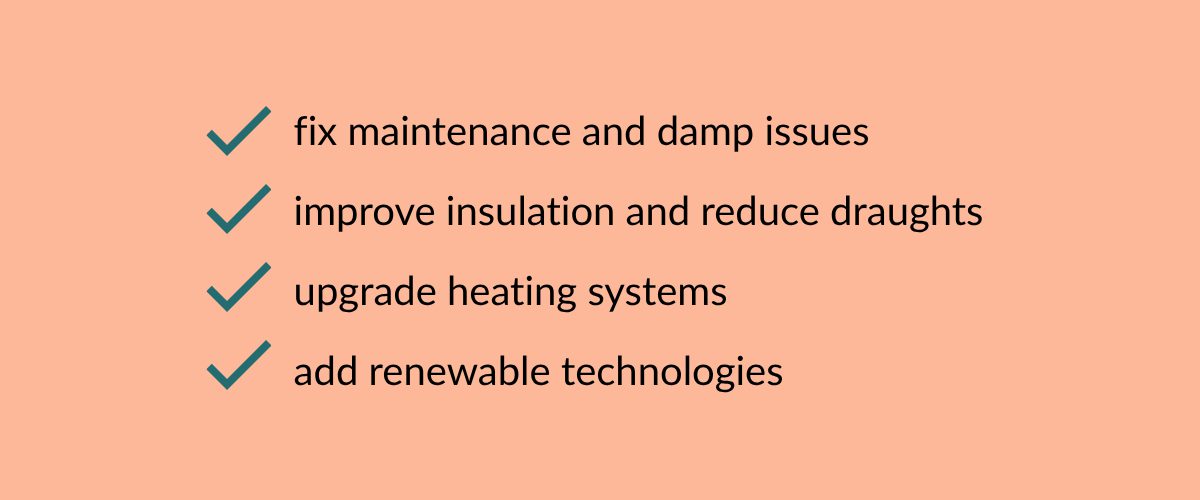
Taking this whole-house approach helps avoid unintended consequences and ensures each improvement supports the next.
Are you thinking about upgrading the energy efficiency of your home but not sure what to do next? PEC Future Fit can help.
Check our Future Fit services page to learn more about our services.