
Everything you need to know about Solar Panels
Wondering if solar panels could work for your home?
An increasing number of people are producing their own electricity, and thanks to solar panels, it’s now both realistic and reliable.
Solar photovoltaic (solar PV) panels capture daylight and convert it into electricity that can power your home, from everyday appliances like the kettle to larger devices such as the washing machine.
By producing your own electricity, you can lower your energy bills and reduce your carbon footprint.
If you generate more than you use, you can sell the surplus back to the grid. Solar panels can help you save money and potentially earn some too. On top of that, you also contribute to saving the planet.
What are solar panels (solar PV)?
Solar panels (officially known as solar photovoltaic, or solar PV) use light from the sun to generate free electricity. We can then use this electricity in our home, to power anything from boiling a kettle to an electric vehicle. Not only is the electricity from your panels free, it’s also renewable. This means that instead of relying on external sources of energy, you can generate your own energy. Solar panels can also help us save money.

How do solar panels work?
Each solar panel is made up by a number of individual silicon cells - typically around 60 per panel. These cells work together to generate electricity in a simple, reliable process:
1. Sunlight reaches the solar panels.
2. The silicon cells absorb this light.
3. As they absorb the energy, an electrical charge is created, producing DC (direct current) electricity.
Because our homes use AC (alternating current) electricity, the solar PV system includes an inverter. This device converts the DC electricity from the panels into AC electricity, making it ready to power everything from your lights to your household appliances.
Is my home suitable for solar panels?
Whether solar panels are suitable for your home will depend on a few practical factors:
A south‑facing, unshaded roof offers the best conditions for generating electricity. East‑ or west‑facing roofs can also work well – generating most of the electricity in the morning or in the afternoon respectively. North‑facing roofs are less effective because they simply don’t receive enough direct daylight to produce a meaningful amount of power.
Solar panels are installed in groups known as arrays. The size of a solar panel is approximately 1mx2m. A typical array starts from 3 solar panels. The more space you have, the larger the array that can be fitted - and the more electricity you’ll be able to generate.
Chimneys, nearby trees, and surrounding buildings can create shade throughout the day. If your roof is shaded for long periods, the panels may not receive enough daylight to operate efficiently.
In most cases, solar panels don’t require planning permission. However, if your home is in a conservation area, is a listed building, or is located within a national park, you may need approval from your local authority.
It’s important to know whether your roof structure can support the additional weight of the panels. Features such as roof lights may also influence how and where an array can be installed. Most solar panels installers will also require the presence of a waterproof membrane under the roof covering.
How many solar panels do I need?
The average solar PV system in the UK is around 3.5kWp, which usually means installing about 8 panels and using roughly 16m² of roof space.
While it can be appealing to fit as many panels as possible, this is only beneficial in certain situations - particularly if you have a battery to store any electricity you don’t use straight away, or if you are on a tariff that pays you for exporting surplus electricity back to the grid.
Without either of these options, much of the extra electricity generated could go unused. Choosing a system size that matches your home’s needs helps ensure you get the best value and efficiency from your installation. However, bear in mind that any exported electricity will still contribute to making the grid greener.
The exact number of solar panels you need for your home really depends on how much electricity you’re trying to generate. For example, people spending more time at home will benefit more from a solar pv system, unless the energy generated is stored in a battery.
How much do solar panels cost?
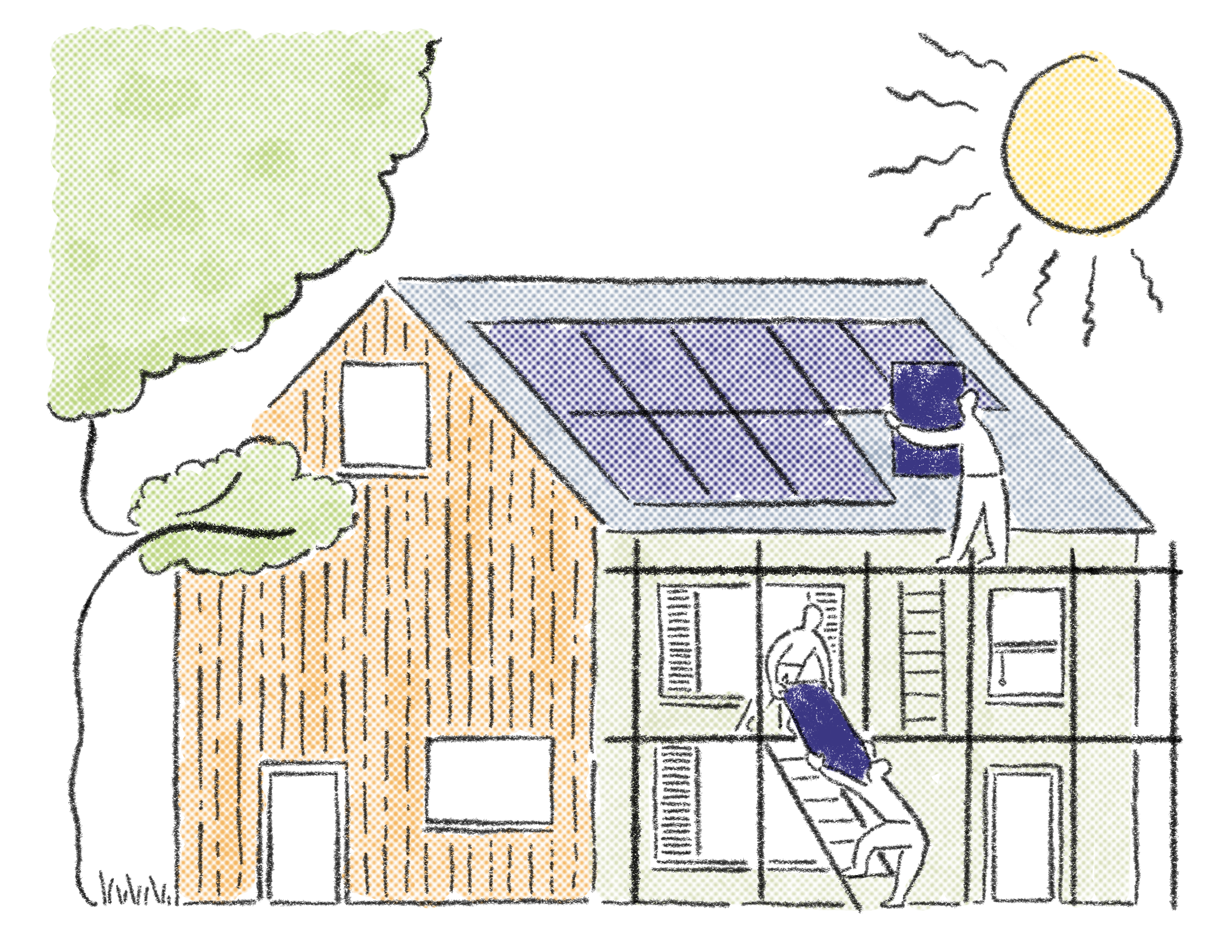
A typical 3.5kWp solar PV system costs an average of around £6,000. The exact price will depend on several factors, including the size of the system you choose and how straightforward it is for installers to access your roof.
Because costs can vary between companies, it’s a good idea to gather at least three quotes.
When comparing them, make sure any installer you consider is registered with the Microgeneration Certification Scheme (MCS), as this ensures they meet recognised industry standards.
Registering your solar pv system
Unless you live off grid, a solar PV system is connected to the national electricity grid. This gives you two key benefits: you can export any electricity you don’t use, and you can draw power from the grid whenever your panels aren’t generating enough - such as at night or on very cloudy days. To set up this connection, your system needs to be registered with your local District Network Operator (DNO), the company responsible for managing the electricity network in your area. In most cases, your installer will handle the DNO registration for you, so you won’t need to manage this part yourself.
Battery storage
Our energy use doesn’t stop when the sun sets, which is why many people choose to add a battery to their solar PV system. During the day, any electricity your panels generate can be stored in the battery and then used in the evening or overnight when the panels aren’t producing power. A battery can be a good option if your system regularly generates more electricity than you use during the daytime. In some cases, though, it may be more cost‑effective to sell that surplus energy back to the grid instead - so it’s worth considering both possibilities.
Batteries come in a range of sizes and chemical composition. The right choice for your home will depend on your energy habits, the amount of power your solar array typically produces and your budget. If your aim is to have stored energy that lasts through the night, it can help to look at how much electricity you normally use during those hours.
Smart Export Guarantee (SEG)
With the Smart Export Guarantee (SEG), you can receive payments for any electricity your solar panels export to the national grid. To receive SEG payments, you’ll need to sign up for a dedicated SEG tariff with your energy supplier. All suppliers with more than 150,000 customers are required to offer at least one SEG tariff, giving you a range of options to choose from. Payment rates vary between tariffs. Each energy company can set its own price per kilowatt hour, as long as it’s above zero. To see which SEG tariffs are available to you, it’s worth checking your supplier’s website or contacting them directly.
Want to hear stories of local people who have upgraded their homes?
All kinds of different properties are getting retrofitted right across the South West. We've gathered these stories about the benefits of retrofit, in partnership with other local community energy organisations in Devon and Cornwall.
Read more about Jean's story here and Anna's story here.
How do I find out more?

Want to know if solar panels will work for your home? PEC can help.
Our Future Fit services provide independent, expert advice on the suitability of solar panels for your property and how they can fit into a wider home upgrade.
If you are just starting out on your retrofit journey, a free Home Visit is the easiest way to explore what’s possible for your home.
If you are ready to make your home feel even better choose a Future Home Survey for a detailed retrofit plan tailored to your home.
Visit our Retrofit Services page or complete the contact form below to get started.
Solar Panels FAQs
Solar PV systems are designed to have a long lifespan. You can typically expect the solar panels themselves to last around 25 years. The system’s inverter, however, usually has a shorter lifespan and may need to be replaced after about 10 years.
Solar panels generate DC (direct current) electricity, which isn’t immediately ready for use in our homes. The inverter takes care of this by converting the DC power into AC (alternating current), making it suitable for everyday appliances. If your system includes battery storage, the inverter also manages the flow of DC electricity to the battery, ensuring energy is stored efficiently.
Solar panels require very little upkeep and are generally self‑cleaning, thanks to natural rainfall. To keep your system performing at its best, we recommend giving the panels an occasional clean with a bit of soapy water or biological detergent if required. You may also wish to arrange a routine inspection and maintenance every few years.
Yes - if you have adequate space and there are no shading concerns, ground‑mounted solar panels can be an excellent option. While they are generally more expensive to install than roof‑mounted systems, they offer the advantage of being positioned at the ideal angle and orientation, helping you maximise energy generation.
To make the most of the electricity your solar panels generate, it’s a good idea to run high‑usage appliances - such as washing machines and dishwashers - during the day when the panels are producing the most power. Staggering these appliances, rather than running them all at once, helps you use as much of your own solar electricity as possible. Many appliances have delay‑start timers, which can make this even easier to manage.
Kilowatt peak (kWp) describes the maximum rate at which a solar PV system can generate electricity under ideal circumstances. For example, a 1 kWp system could produce up to 1 kW of power in perfect sunlight, although real‑world output is usually lower. Most home solar arrays fall between 3 and 4 kWp.
Kilowatt hours (kWh) measure the total amount of energy a solar array produces over time. This depends on several factors, including panel orientation, shading, sunlight levels arraysize and the kWp rating of the panels. As a guide, a well‑designed system typically generates around 700 to 900 kWh per kWp each year.